Saathiya NCDs & risk factors survivors for Good Health is an initiative of Nada India. It features and promotes ordinary people with extraordinary idea and commitment to promote Good Health and Well-being among people of all ages. Saathiya is platform to share hope and voice their concerns related to Good health in a market driven society.
Showing posts with label community conversation. Show all posts
Showing posts with label community conversation. Show all posts
व्यवहारिक एवं स्वास्थ्य संकेत और लक्षण – प्रारंभिक जाँच सूची
(Peer-Led Rehabilitation Centre में भर्ती के समय उपयोग के लिए)
✅ मानसिक और भावनात्मक संकेत
🔹 अत्यधिक चिंता, तनाव या अवसाद 🔹 अचानक मूड स्विंग्स, चिड़चिड़ापन या आक्रामकता 🔹 आत्महत्या या आत्म-हानि के विचार 🔹 सामाजिक दूरी बनाना या अकेले रहना पसंद करना 🔹 निर्णय लेने में कठिनाई या ध्यान केंद्रित करने में परेशानी 🔹 अत्यधिक डर, वहम या मानसिक भ्रम
✅ शारीरिक संकेत
🔹 लगातार थकान या ऊर्जा की भारी कमी 🔹 भूख में अचानक बदलाव (बहुत अधिक या बहुत कम खाना) 🔹 नींद की समस्या (अनिद्रा या अत्यधिक सोना) 🔹 हाथ-पैर में कंपन, पसीना आना या तेज़ धड़कन 🔹 बार-बार सिरदर्द, चक्कर आना या कमजोरी 🔹 लगातार खांसी, सीने में दर्द या सांस लेने में तकलीफ (टीबी का संकेत) 🔹 अचानक वजन घटना या बढ़ना (एनसीडी और टीबी का संकेत) 🔹 पैरों या चेहरे पर सूजन (हृदय या गुर्दे की समस्या का संकेत) 🔹 बार-बार बुखार या रात में पसीना आना
📢 यदि आप या आपका कोई परिचित इन लक्षणों का अनुभव कर रहा है, तो समय रहते मदद लें! Nada India Foundation उन लोगों की सहायता करने के लिए तत्पर है जो इन संकेतों और लक्षणों से पीड़ित हो सकते हैं। हम उनसे और उनके परिवारजनों से संवाद करते हुए आवश्यक मार्गदर्शन और सहयोग प्रदान करने के लिए तैयार हैं। WhatsApp number 9810594544
💙 स्वास्थ्य, जागरूकता और पुनर्वास के लिए साथ आएं! #NadaIndia #स्वास्थ्यसजगता #SupportRecovery #टीबीमुक्तभारत #NCDAwareness
During a recent discussion at the XI Indian Social Work Congress 2023,Suneel Vatsyayan* had a thought-provoking conversation with Dr. Sudershan Passupuleti, PhD, a Professor at the School of Social Work, University of Texas Rio Grande Valley. This insightful dialogue took place within the corridor of the National Urdu University guest house Hyderabad.
The conversation revolved around the theme "Leave No One Behind," shedding light on the challenges faced by professional social workers in reaching those who need assistance the most.
The Stigma Surrounding Help-Seeking: In today's society, certain groups, including adolescents, youth, women, and girls, often find it challenging to open up about issues such as non-communicable diseases (NCDs), addiction, trauma, domestic violence, and mental health. The reluctance to talk about feelings and seek help perpetuates a taboo that hampers effective service delivery at the grassroots level.
Nada Acudetox Counselling India Network: Suneel Vatsyayan shared insights into the Nada Acudetox India Network, an initiative aimed at promoting barrier-free health delivery services among marginalised communities. This network emphasises community wellness for behavioural health, encompassing addiction,NCDs and its risk factors, mental health, and disaster and emotional trauma.
Professional Social Worker's Role in Calming the Inner Self: The dialogue delved into the question of whether professional social workers can teach clients to relax from the inside out. By inducing a sense of calm and quieting symptoms, interventions aim to stimulate one's inner energy, bringing individuals into a more balanced state conducive to communication.
Primary Prevention and Engaging Clients: The conversation extended to the primary and primordial prevention levels of intervention. Can social workers treat clients before completing assessments and diagnoses to ensure a cooperative and calm environment for effective diagnosis?
Challenging Assumptions: Several critical questions were raised, challenging traditional approaches.
Can social workers help clients in denial about the need for treatment?
Is it necessary to confront clients/patient about their drug use or the trauma they have experienced?
Is it possible to make a client relax without them losing control?
Overcoming Barriers to Engagement: The dialogue explored ways to engage clients facing various challenges, such as needy and fearful clients, those with low self-esteem and lack of hope, and trauma victims fearful of interpersonal relations. The goal is to initiate treatment at realistic levels, fostering participation and progression.
Continuity of Treatment: A vital question emerged: can clients return at any time, especially following a relapse, and still experience the benefits of treatment? This highlights the importance of creating a supportive and flexible treatment environment.
Initiating a Global Dialogue: This blog post aims to initiate a broader dialogue on the challenges faced by society and the community in general. We invite social workers, professionals, health advocates and individuals to share their insights, experiences, and solutions. How can we collectively overcome these challenges and truly leave no one behind?
Let your thoughts and experiences flow in the comments below. Together, we can build a more inclusive and compassionate society. nadaindia@gmail.com Mobile 9810594544
*वन्या गुप्ता एक उत्साही नवोदित लेखिका हैं, जिन्हें शब्दों का शौक है। वर्तमान में वह साहित्य में स्नातकोत्तर कर रही हैं| वह अपनी शैली के साथ प्रयोग करते हुए कई विषयों पर लघु कथाएँ और लेख लिखती हैं| पिछले लगभग 2 वर्षों से वह नाडा यंग इंडिया नेटवर्क से जुड़कर भारत से तंबाकू की समस्या दूर करने में प्रयासरत है|
गलतियाँ बहुत की मैंने| अगर उस दिन मेरे घर वाले मुझे नशा मुक्ति केंद्र तक नहीं ले जाते तो ना जाने मैं आज कहाँ होता| मेरे इस सफर में ये डूबता हुआ सूरज हर वक़्त मेरे साथ था| एक वक़्त में मैं भी इसके साथ डूब रहा था लेकिन आज मैं इसके साथ डूबता नहीं, बल्कि अगले दिन इसके साथ जागकर अपने जीवन में रोशनी भरता हूँ|
शाम ढल रही थी| कहने को तोआज का दिन भी बाकी दिनों जैसा ही था| ऐसा कुछ अलग तो नहीं हुआ था आज, लेकिन मुझे पुराने दिन बहुत याद आ रहे थे| इन्ही वादियों में मैंने अपनी पूरी ज़िन्दगी बिताई थी| कितनी ही शामे़ मैंने ऐसे ही बादलों के पीछे छुपते हुए सूरज को देख के बिताई थी| पर आज कुछ खास था| आज मेरी ज़िन्दगी को बदले हुए दो साल पुरे हुए थे| शायद इसीलिए मुझे आज ये सब बातें याद आ रही थी| अगर दो साल पहले आज के दिन मैंने सही फैसला न लिया होता तो शायद आज मैं यहाँ बैठ कर इस सूरज से बाते नहीं कर पा रहा होता|
बचपन की बातें ज़हन में बहुत गहरी छाप छोड़ जाती है| मुझे कोई तकलीफ नहीं थी बचपन में, ऐसी कोई कहानी नहीं है| माँ और पापा दोनों का भरपूर प्यार मिला मुझे| मेरी माँ खाना बनाते हुए एक बहुत प्यारा सा गाना गया करती थी| मैं भी वहीं बैठ कर उनका गाना सुना करता था| स्कूल से आते वक़्त रास्ते से छोटे-छोटे पीले रंग के फूल तोड़ के लाता था| माँ हर बार वही फूल देख कर भी ऐसे खुश हुआ करती थी जैसे वो दुनिया के सबसे खूबसूरत फूल हों| जब पापा शाम को घर आते थे तो हम साथ बैठ कर चाँद को देखा करते थे और पापा मुझे बड़े-बड़े लोगों की कहानियाँ सुनाया करते थे| मुझे कभी किसी चीज़ की कमी नहीं महसूस हुई| पर एक गलत कदम ने मेरी सारी दुनिया इधर की उधर कर दी| आठवीं कक्षा की बात है| दोस्तों के साथ घूमना-फिरना मेरा हर रोज़ का काम था| एक दिन मेरे एक दोस्त ने मुझे पुराने पेड़ के पास वाली खली जगह आने को कहा| अपने दोस्त की चिंता मुझे वहाँ तक खींच ले गयी| वहाँ जाके मुझे जीवन का वो राज़ पता चला जो दिखता भले ही मामूली सा हो लेकिन चाहे तो किसी की हँसती-खेलती ज़िन्दगी को जला के राख कर सकता है| सिगरेट| मुझे पता था मुझे ये नहीं करना चाहिए| मुझे पता था ये मेरे लिए गलत है| लेकिन दोस्तों के साथ मुझे पता भी नहीं लगा मैंने कब पहली बार सिगरेट को हाथ में पकड़ा| पहली से दूसरी| दूसरी से दसवीं| न जाने कब ये मेरा रोज़ का हो गया| जिन शामों में मैं पहले छत पे बैठ कर सूरज को देखा करता था, वही शाम थी, वही सूरज था, पर मेरे साथ अब सिगरेट थी| मैं देखता रह गया और ये मेरी ज़िन्दगी का हिस्सा बन गयी, मेरा हर रोज़ का किस्सा बन गयी| जब खरीदने के लिए पैसे कम पड़ने लगे तो मुझे झूठ बोलना भी आ गया|
आवश्यकता ही आविष्कार की जननी है| ये बात मैंने सिर्फ घरवालों से झूठ बोलने में लागू की|
इन बातों को दो साल बीत गए| सिगरेट मेरी ज़िन्दगी का ऐसा हिस्सा बन गई थी की मेरे लिए ये बहुत आम बात हो गयी थी| कहानी यहाँ ख़तम नहीं होती| अभी मुझे और भी गलतियां करनी थी| दसवीं कक्षा में मैं और मेरा दोस्त एक शादी में जा पहुंँचे| जाकर देखा की सब बड़े आदमी एक तरफ इकठा होकर कुछ पी रहे थे| मैंने अनजाने में अपने दोस्त से कहा "चल हम भी जाकर देखते हैं ऐसे क्या है|" मेरा दोस्त हँस दिया और कहने लगा "यहाँ बड़े लोगों के बीच में नहीं| तू कल मुझे अपनी वाली जगह मिलियो| वहाँ पिलाऊँगा|" अगले दिन जब मैंने पहली बार वो पिया तो मुझे लगा कोई कैसे पीता होगा इसको| मेरे दोस्तों ने कहा "शुरू-शुरू में अजीब लगेगा तू पीकर तो देख अच्छे से|" इस तरह शुरू हुई मेरी और शराब की दास्ताँ| फिर ये भी मेरा रोज़ का हो गया| रोज़ मेरा पीकर घर आना| रोज़ मेरे पापा का गुस्सा करना| रोज़ मेरी माँ का हम दोनों के झगड़े के बीच में बोलना| अच्छा तो नहीं लगता था पर क्या करता? बुरी लत का मारा था|
दो साल और ऐसे ही निकल गए| उन्नीस का हो गया मैं| कॉलेज में आ गया| यहाँ आकर मेने फिर एक और गलत कदम उठाया| मुझे लगा था मैं तो सिगरेट और शराब दोनों का आदी हूँ बड़ी आसानी से दोस्त-यार बनेंगे और फिर सब साथ में पिएंगे| यहाँ कॉलेज में आकर देखा तो सब लोग कुछ और ही चीज़ के आदी थे| हेरोइन| चित्ता| ड्रग्स| दोस्तों से कहीं मैं पीछे ना रह जाऊं इस होड़ में मैंने चित्ते से भी दोस्ती करली| कमाल ये हुआ की अब मुझे डाँट पड़नी भी बंद हो गयी| मेरी गलती का गवाह बनने के लिए न तो सिगरेट का धुआँ होता था और न ही शराब की बदबू| मेरे घरवालों को लगा मैंने सब नशे छोड़ दिए| अब मैं बिना किसी डर के ड्रग्स में डूबने लगा| मेरी ज़िन्दगी और आसान हो गयी| लेकिन बस कुछ ही दिनों के लिए|
उसके बाद मेरे सामने एक नयी चुनौती आई| पैसे की| नशा करना मैंने सीख लिया और उस नशे के लिए पैसे चुकाने पड़ते हैं ये भी सिख लिया| बस वो पैसे कमाना नहीं सीखा था| कुछ दिन तो घर में झूठ बोलकर पैसे मांगता रहा| पर ऐसे भी कब तक चलता? अपनी लत के हाथों मजबूर होकर मैंने चोरी शुरू करदी| यहाँ पापा के बटुए से तो वहाँ माँ के चीनी के डब्बे से, कभी कम तो कभी ज़्यादा, पैसे चोरी करने लगा| जब ये भी काम पड़ने लगे तो पडो़सी के घर से, आते जाते किसी इंसान से, जहाँ मौका मिले वहीं से| मैं पूरी तरह से इन चार चीज़ों के काबू में था- सिगरेट, शराब, हेरोइन और चोरी| हाथ की सफाई मेरे लिए बच्चों का खेल बन गयी थी|
इसी सिरे में एक दिन मैंने अपने चाचा की जेब में हाथ डाला| पकड़ा गया| मेरे माँ बाप के सामने लाके मुझे खड़ा कर दिया गया| मेरी हर लत, हर चोरी का खुलासा किया गया| मेरी माँ के आंसू| पापा का गुस्सा| परिवार के ताने| ज़िन्दगी ने कभी इससे ज़्यादा ज़लील नहीं किया था| उस दिन मुझे समझ आ गया था की मुझे क्या करना है|
मेरे घरवालों ने मुझे नशा मुक्ति केंद्र भेज दिया| 6 महीने रहा मैं वहाँ| ज़िन्दगी के छोटे-छोटे टुकड़ों को समेटना सीखा मैंने| जिस गलत राह पे मैं चल पड़ा था वो छोड़ कर पहली बार सही रास्ता देखा मैंने| वहाँ के लोगों को जाना-पहचाना तो पता चला किस्मत क्या-क्या खेल पलट देती है| मुझे तो भगवान ने सब कुछ दिया था और मैं उसे अपने ही हाथों से बर्बाद कर रहा था| अब मुझे ये गलती दोबारा नहीं करनी थी| मन में ख्याल आया की कहीं फिर तूने दोस्तों के चक्कर में ये गलतियाँ दोहरा ली तो? मेरी खोई हुई पहचान जो मुझे इतनी मुश्किल से वापिस मिली थी, उसे में दोबारा नहीं खो सकता था| इसीलिए मैंने कर्मा वेलफेयर सोसाइटी की ओर खुद को मोड़ दिया| वहाँ मेरे जैसे दूसरे परेशान लोग आया करते थ| इस नशे के दलदल से बाहर निकलने में मैं उनकी सहायता करने लगा| बहुत दिन मन लगा कर मेने उनकी सेवा की| जब भी कोई ठीक होकर वहाँ से जाता था, अपने आप को सँवारता था, तो मुझे लगता था की मैंने अपनी एक-एक गलती का प्रायश्चित्त कर लिया हो| उन सभी को आगे बढ़ता देख मैंने भी अपने आपको एक दूसरा मौका देने की कोशिश की| आज मैं एक ड्राइवर हूँ| मेरी अपनी एक छोटी सी ज़िन्दगी है| छोटी-छोटी खुशियाँ है| पर बड़ी गलतियों से अब मैं दूर रहता हूँ| जब वक़्त मिलता है तो वापिस दुसरों की सेवा करने कर्मा वेलफेयर सोसाइटी पहुँच जाता हूँ|
गलतियाँ बहुत की मैंने| अगर उस दिन मेरे घर वाले मुझे नशा मुक्ति केंद्र तक नहीं ले जाते तो ना जाने मैं आज कहाँ होता| मेरे इस सफर में ये डूबता हुआ सूरज हर वक़्त मेरे साथ था| एक वक़्त में मैं भी इसके साथ डूब रहा था लेकिन आज मैं इसके साथ डूबता नहीं, बल्कि अगले दिन इसके साथ जागकर अपने जीवन में रोशनी भरता हूँ|
Riya Nada India Youth Catalyst attended "Survivor's Day" organised by Indian Cancer Society on 6th February,2020 at Select Citywalk Mall. The event had a burst of colour and laughter celebrating the victory of people against cancer. There were dance and musical performances by survivors young and old as well as some professional groups who had all come together to create a joyous afternoon in the wake of World Cancer Day. What stuck with me were the words of a doctor from Max Hospital who said, "We fall sick alone, but we can heal in a community. Let's forms a human chain to combat cancer."
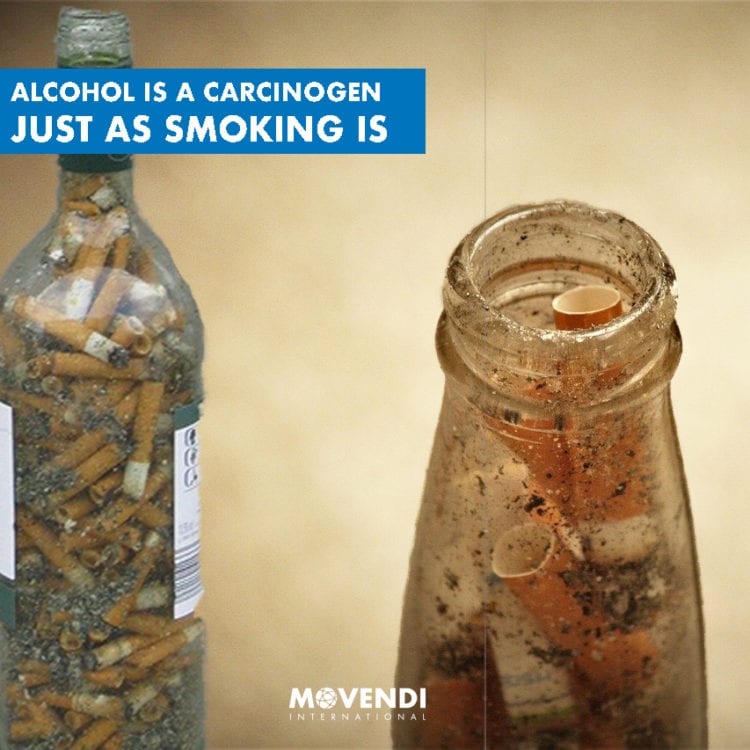
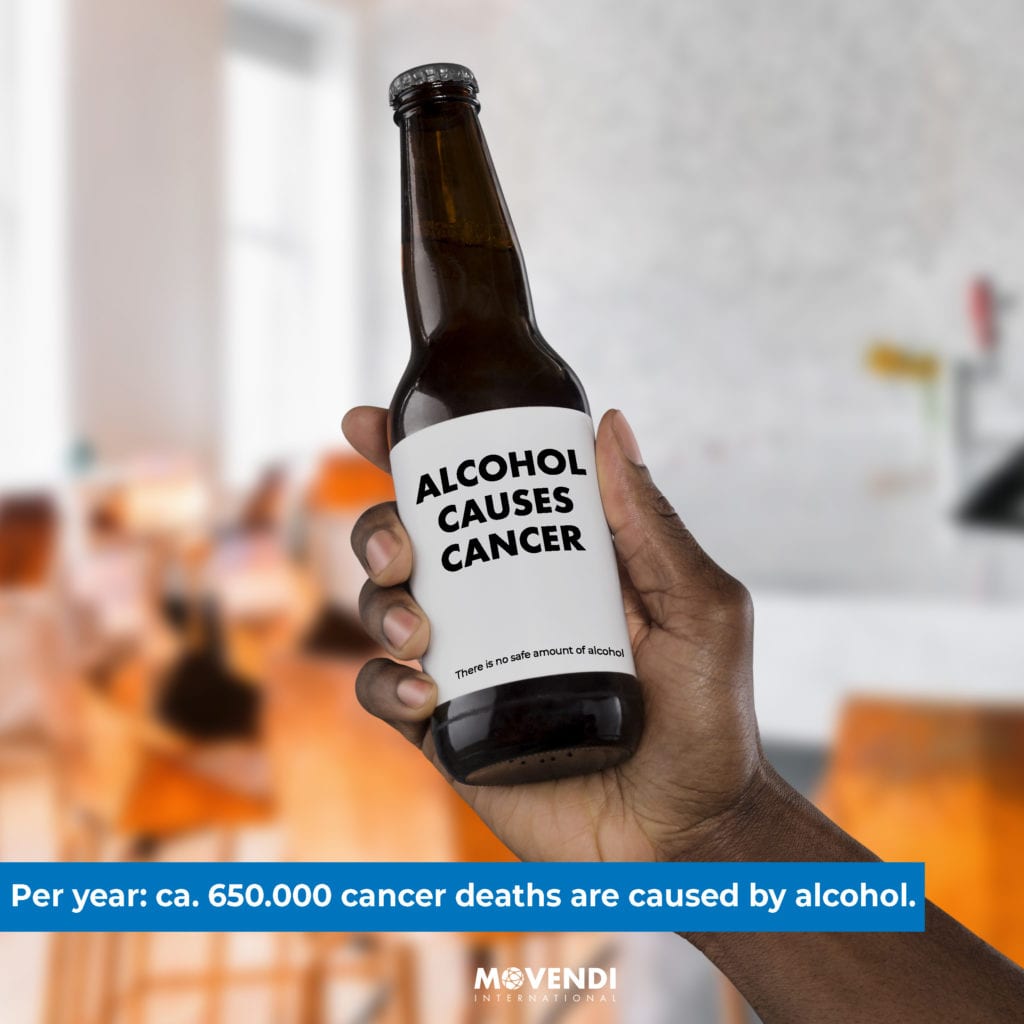
World Cancer Day 2020: Cancer Prevention through Alcohol Policy
Alcohol-related cancer deaths are a global public health crisis. For breast cancer globally, alcohol is the single biggest risk factor. In total, alcohol-related cancer causes 650.00 deaths every year.
But awareness and understanding of the alcohol-cancer link remains shockingly low and a far cry from the levels of awareness of smoking and cancer.
This is not only a matter of public health concern but a social justice crisis.
It is time to change that and turn the tide on alcohol-fuelled cancer.Evidence shows that informing people, increasing awareness and understanding of alcohol's cancer risks leads to bigger support for alcohol prevention and control measures. This in turn leads to significant reductions in cancer mortality.
We calculated the cancer deaths averted from improved alcohol policy through a 10% and a 30% total per capita alcohol consumption reduction scenario.
Assuming 649,840 alcohol-related cancer deaths in 2017, a 10% reduction of total alcohol use would lead to 9% fewer alcohol-related cancer deaths, meaning 57,300 fewer deaths.
With a 30% lower total alcohol consumption, calculations show that 26% of alcohol-related cancer deaths could be averted, meaning 171,460 fewer deaths.
let's start the movement to raise awareness among the broader public and empower decision-makers to tackle the alcohol-cancer link. The returns on investment will be substantial...
Jyostna Govil’s lifelong experience of caring for people living with NCDs has taken many forms. Following her father’s diagnosis with an inoperable stomach cancer 35 years ago, she helped to build the Indian Cancer Society in New Delhi and began dedicating her life to cancer screening, awareness, and patient support. In 2013, Jyotsna’s husband was diagnosed with Alzheimer’s Disease and she spent 6 years caring for him. Today, she works tirelessly with the Healthy India Alliance to help break down stigma and discrimination surrounding NCD treatment and care and to bring her intimate insights of dealing with co-morbidities to the field of NCDs.
Universal Health Coverage packages must address the needs of people living with multiple chronic conditions in order to be comprehensive and people-centred.
Nada India is founding Governing Board member of Healthy India Alliance
She added, “Health is highly gendered especially the NCDs. When I say, I have Rheumatoid Arthritis, the interest in my condition and the accompanying morbidity somehow lessened in the hierarchy of NCDs. And I see this among other female patients.” Instead of giving up, Jyotsna Roy is busy as a health advocate inspiring others who are victims of non communicable diseases to live bravely. And help others. Incidentally Jyotsna Roy attended on behalf of Nada India the 72nd World Health Assembly early this month in Geneva organized by the WHO.
Prof.T.K.Thomas The annual World No Tobacco Day was observed on 31st May. The day is observed by the World Health Organization [WHO] and global partners as an opportunity to raise awareness on the harmful and deadly effects of tobacco use and secondhand smoke exposure and to discourage the use of tobacco in any form. This year’s focus for the day was, “Tobacco and lung health”. Everyone knows how tobacco affects our lungs. The WHO release says, the campaign will increase awareness on, “the negative impact that tobacco has on people’s lung health, from cancer, to chronic respiratory diseases”. There are frightening figures about the mortality attached to tobacco related diseases. A study by three Indian researchers in 2012 revealed that “tobacco is a leading preventable cause of death, killing nearly six million people worldwide each year. Reversing this entirely preventable man made epidemic should be our top priority. The global tobacco epidemic kills more people than tuberculosis, HIV/AIDS and malaria combined. India is the second largest consumer of tobacco globally and accounts for approximately one sixth of the world’s tobacco related deaths”. Despite the above shocking figures, last Friday’s Anti Tobacco Day went off silently with hardly any major events or the media highlighting the critical importance of this major health problem. Such issues on our health and well being are not a priority for a highly commercialized media except when there are breakouts of epidemics or health disasters or emergencies. It may be mentioned here that a new problem has emerged with the increasing use of what is known as ENDS [Electronic Nicotine Delivery System] or e-cigarettes and on World No Tobacco day last week the Indian Council of Medical Research [ICMR] released a White Paper recommending “a complete prohibition on e-cigarettes in India in the greater interest of protecting public health.” The White Paper further points out how the country has worked hard and succeeded in effecting a 6% decline in tobacco use. Hasn’t the spread of e-cigarettes as an addiction subtly promoted by commercial interests put a question mark on that success story of slowly winning the fight against the scourge of tobacco? Addiction to alcoholism, smoking and abuse of designer drugs are lifestyle non communicable diseases unlike communicable diseases caused by germs, bacteria, viruses etc. There is increasing recognition of non communicable diseases as a major threat to health and well being. Mercifully health care issues now focus more on non communicable diseases. One has come across a very interesting document by the NITI Aayog entitled “Strategy for New India@75”. The statistics on health given in the document are revealing. For example, of total current expenditure on health classified health care functions, preventive care accounts for 6.7 percent and the money spent on curing people on the other hand is 51% of the expenditure. India accounts for 18% of the global population [2016] but we account for 34%of the global tuberculosis burden and 26% of the premature mortality due to diarrhoea, lower respiratory and other common infectious diseases.
“At the same time non communicable diseases [NCDs], including cardiovascular conditions, chronic obstructive respiratory diseases, diabetes, rheumatic arthritis, mental health conditions and cancers are now the leading cause of health loss, with 55%of morbidity and premature mortality attributed to these conditions.”
There was this interesting brainstorming by Nada India on June 1st as a continuation of World No Tobacco Day and marked the launching of Young India Network for Good Health, a youth initiative. Spearheaded by its chairman Suneel Vatsyayan, an acclaimed substance abuse prevention veteran, the programme highlighted participation of youth in combating the rampant problem of non communicable diseases. Vatsyayan said that the WHO uses the hashtag #beatNCDs and called upon the youth to put that hashtag into action!
The participants comprised a mix of experts, health advocates, people living with NCDs including, patient champions and young volunteers associated with the field. It was a learning experience to every stakeholder present and this piece is an attempt to highlight people living with NCDs and their caregivers. Such initiatives may be on a small scale but across the country we have such concerned small groups of youngsters creating awareness among ordinary folks. The presentations of three doctors at the event, Dr. Ajay Vats, chair person of Indian Association of Acupuncture Detoxification Specialists [IAADS], Dr, Arindam Sinha, NADA Acupuncture Detoxification specialist and Dr. Bharat Bhushan, vice president , Federation of NGOs for Drug Abuse Prevention [FINGODAP] facilitated the understanding of the young volunteers of the issues involved in non communicable diseases. As professionals dealing with alcohol and drug addiction prevention, they highlighted addiction as a major NCD. They stressed the need for detoxification, treatment and long term recovery programmes. Dr. Sinha emphasized the effect of NADA protocol on various NCDs such as diabetes, hypertension and insomnia.
There were ‘’patient champions” running peer led drug rehabilitation centers. Two such national award winning entrepreneurs Pradip Goyal, who runs Vikalp in Ghaziabad and Harish Bhutani who runs Nav Vikalp in Jaipur explained the challenges of working with patients who have, besides addiction, cross cutting NCDs like, Tuberculosis, diabetes, HIV/AIDS and mental health problems.
The mental health Act of 2017, they said has made registration of de-addiction centers mandatory with standards of care prescribed and daily visits by a psychiatrist made compulsory. Addiction as a NCD is therefore acknowledged as a mental health issue. The question of smoking by inmates of deaddiction centers was raised in one session of the day long deliberations. Care providers agreed that smoking is a problem. It was pointed out by one of the experts that smoking in health care facilities is banned.
There was also Devendra Jyoti, a peer support activist, [himself suffering from NCDs] who works with homeless people in Delhi for Ashray Adhikar Abhiyan. As a Nada volunteer, he helps a self help group of homeless people. He pointed out the reality of the life of homeless people in Delhi and elsewhere. Most of them are victims of one or more NCDs. The most talked about NCD is cancer. World Cancer Day is observed on February 4, 2019 and all the media come out with reports and special features. Cancer awareness programmes, need for early detection, success stories especially of celebrities, occupied front pages and prime time. People are mortally scared of the disease and cancer is one of the scourges mankind is yet to conquer. Cancer spares none. For example, a peer support counselor and recovering addict Dayanand died of cancer, not addiction, a few years back at the age of 36. Yesterday, 2nd June, incidentally was observed in the United States as Cancer Survivors Day. Special events are organized in the U S to celebrate the lives of the survivors and acknowledge the dedicated service of caregivers. The U S President’s message on the occasion was for the 32nd annual Cancer Survivors’ Day. The Day was noticed by some of our channels also. At least there was the story of actress Lisa Ray, professionally active, living with Multiple Myeloma, a form of blood cancer. Her memoir “Close to the Bone” is considered inspirational by readers. “We should reflect on death at some point in life. It helps us to prepare better“, said Lisa Ray in a television interview on 2nd June. That is the spirit of a person living with a NCD.
In the programme in Delhi on NCDs about which one has written had a presentation by a person living with NCD, Jyotsna Roy who narrated her story of living with rheumatic arthritis, a painful NCD that can have crippling effects. She said,
“There are 5 million people like her who are Rheumatoid Arthritis Sufferer-Survivor [RASS]. It is a silent non communicable disease not talked about much and not listed as a major NCD. It mostly affects women leading to challenging mental states and responses”.
It was heartening to see young volunteers coming together to work with people living with Non Communicable Diseases. Vindhya, a Nada India Young India network volunteer pointed out that,“with the growing young population in India, it becomes extremely important to involve youth and understand their needs at the policy level. This can help them to effectively deal with the cross cutting issues like linkages between alcoholism, tobacco use and tuberculosis. The government must make the political decision to put youth first to make the universal health coverage a reality.”Peace Gong volunteer coordinator, Arunesh Pathak concluded that, “we are motivated to work on NCDs like alcoholism increases domestic violence and as we work on nonviolence such activities assume more meaning.” Source courtesy: https://www.pennews.net/opinion/2019/06/04/inevitable-role-of-young-india
The Healthy India Alliance (HIA) plans to develop a National Advocacy Agenda of People Living with NCDs based on the inputs of those who took part in the five community conversations (Nada organized one such Community Conversation among alcohol and drug using population )held in the India. Nada India Team (Ms.Nidhi,Devender Joti peer educator (PLWNCD) ,Pushpa caregiver and Suneel Vatsyayan ) participated and contributed in the Healthy India Alliance Regional Consultancy Meeting for the Northern Region in Delhi on 28th August 2018. Nada India is also part of HIA core group on patient engagement.
Nidhi shared her experience and feedback
There's an old conventional way of convening corporate meetings but when we work on fronts of issues related to public at large then engagement of participants in the meeting requires breaking those barriers for formal conversation , cut off the veil and talk about the real things in a realistic way.
Mr.Suneel Vatsyayan has done the same , he shaken the participants in the meeting and tried to bring their attention on the fact that as we have to focus on meaningful engagement of people living with NCDs and it's risk factors like alcohol and drugs to do the same we hv you first meaningfully engage ourself in terms of language , personal real life experiences and real life experiences of people we are talking about.
The body language was intimate and words chosen were close to human beings ,that made most people relate as to talk more openly.
Kept sticking to and time and again asked others to focus on the topic and reality.
Perhaps Suneel Vatsyayan Chairperson Nada India was the only one who was more experienced than others in community work.
Very purposefully conveyed his msg. Also shook people to take off mask and talk freely as one time or another we all have to face same difficulties for the purpose we are here for discussions.
Pushpa both as Nada community worker shared her experience well.
Also as care giver she shared her true feelings. Her wounds are fresh and she needs time to heal. But her spirits are high and ver courageous lady she is.
Devender Joti one of the peer educator of Nada India shared his personal experience and professional experience well in dealing with PLWD and NCDs.
As he has worked in social sector that is unorganized work sector ,he has worked in a free environment with less obligations to adhere to certain way of work and that is good also as we are not in any race for perfection and one should not be.
Its good we as People Living with NCDs got opportunity to express ourselves freely and also hv choice for work. Nidhi Nada India Team.
Hi Friends, I am Nitish Rai I was diagnosed with Type 1 diabetes 20 years ago, when I was 4 years old. Type 1 diabetes is an invisible disease. To look at me you wouldn’t know there was anything wrong. But living with the condition is a 24/7 thing. It has completely changed my life and, in different ways, affects every aspect of what I do. Eating and exercise can be tricky Every time I eat, I need to think about how it is going to affect my sugar levels. As I have Type 1 diabetes, my pancreas cannot produce insulin and I need to inject myself with the hormone, usually five times daily, and attempt to replicate the work of the organ. Carbohydrates increase my blood sugar level, so every snack and meal is a maths challenge, requiring me to calculate how much insulin I need to inject to counteract the spike in my blood sugars.
I love running and going to the gym,playing cricket, but this also affects my diabetes as too much exercise can make my blood sugar levels go dangerously low, while certain types can cause them to spike too high.
I constantly need to check my sugars and adjust my insulin intake – no two days are the same! Exercise is good for me but it's certainly not a simple and straightforward endeavour. I have to constantly tell people that I didn’t get diabetes from eating sugar
Diabetes has a bad reputation and it is often the subject of jokes.
I have found that most people don’t understand the difference between Type 1 and Type 2 diabetes. I have Type 1 diabetes, which accounts for about 10 per cent of cases. No one knows exactly what causes it, but it’s not to do with being overweight and it isn’t currently preventable. People with Type 2 diabetes don’t produce enough insulin or the insulin they produce doesn’t work properly (known as insulin resistance) - 90 per cent of people with the condition have this form. They have developed the condition because of their family history, age, weight or ethnic background which puts them at increased risk. It starts gradually, usually later in life, and it can be years before they realize they have it. Living with diabetes day to day often causes a lot of feelings of guilt because when my blood sugar levels don’t do what they should do, it often leaves me feeling that it is my fault. What did I do or eat to make that happen? I wish people knew that even when you do everything right with diabetes, it can still go wrong and it doesn’t help when society often portrays the condition as something you brought on yourself and should feel guilty about. I never stop thinking about my diabetes Diabetes is a complex health condition. Unfortunately, once you are diagnosed you can’t just be sent home from hospital with a straightforward prescription for medication to take every day for the rest of your life. Insulin is not a cure for diabetes - it’s just a treatment and I need to work really hard to make it work. So many little things affect my blood sugar levels, from exercise to stress to the temperature outside! If I don’t keep my diabetes under control and blood sugar levels within the recommended range then there is a high risk of developing some dangerous complications, including stroke, kidney disease and even amputation. I think about my diabetes all day long – even when I go to bed and try to switch off after a long day, I am worrying that my blood sugar levels could drop unexpectedly. It’s never ending with diabetes - you don’t get a day off and there are days when it’s the last thing I feel like dealing with, but I don't have a choice. It’s hard to be spontaneous when you are a Type 1, as you always need to think about how what you are doing will impact your diabetes. But I still do the things I love Although my diabetes is a large part of who I am, with the right understanding, education and medication, I can take control of my condition and still live the life that I choose. I was able to go onto a diabetes education course a few years ago, provided by the AIIMS, which really helped me to better understand how to manage my diabetes day to day. I found it invaluable and would encourage anyone else with the condition to find out more by asking their doctor or nurse. Along with raising awareness about how useful the courses are the charity wants to make sure they are available to everyone with diabetes across the India. Currently they are not. That is something that has to change.
These days, I am able to control my diabetes so it doesn’t control me.
I can do any what which I want and eat the foods that I like. I am able to run and I am planning to play a cricket tournament. Having diabetes can be complicated but with the right support and understanding it doesn’t need to stop you from doing the things you love!
Hi I am a Nada Good Health Advocate...... Next month I am going to complete my 14 years of recovery from drugs & alcohol. For last 14 years I have been taking care of patients suffering from medical disorders like – diabetes, cancer, alcoholic lever disease and hyper tension. These co-occurring medical problems make the treatment of substance use disorder a lot more difficult and risky. Therefore, training to handle these co-occurring disorders is very important for a person working in substance use disorder field. I believe prevention of NCDs is all in our attitudes and we need to change the attitude & belief of people towards #NCDs and people living with NCDs (#PLWNCDs).
I recently participated in the 'Our Voices Our Community' in Geneva and now will be applying my experience more confidently to handle such patients as a Nada volunteer, peer educator & care giver. The experience gained in the workshop will be utilized for the prevention of NCDs as part of alcohol & drug awareness programs. I also presented to the Nada India scroll of appreciation on behalf of Nada India NCD Network leadership to the NCD alliance.
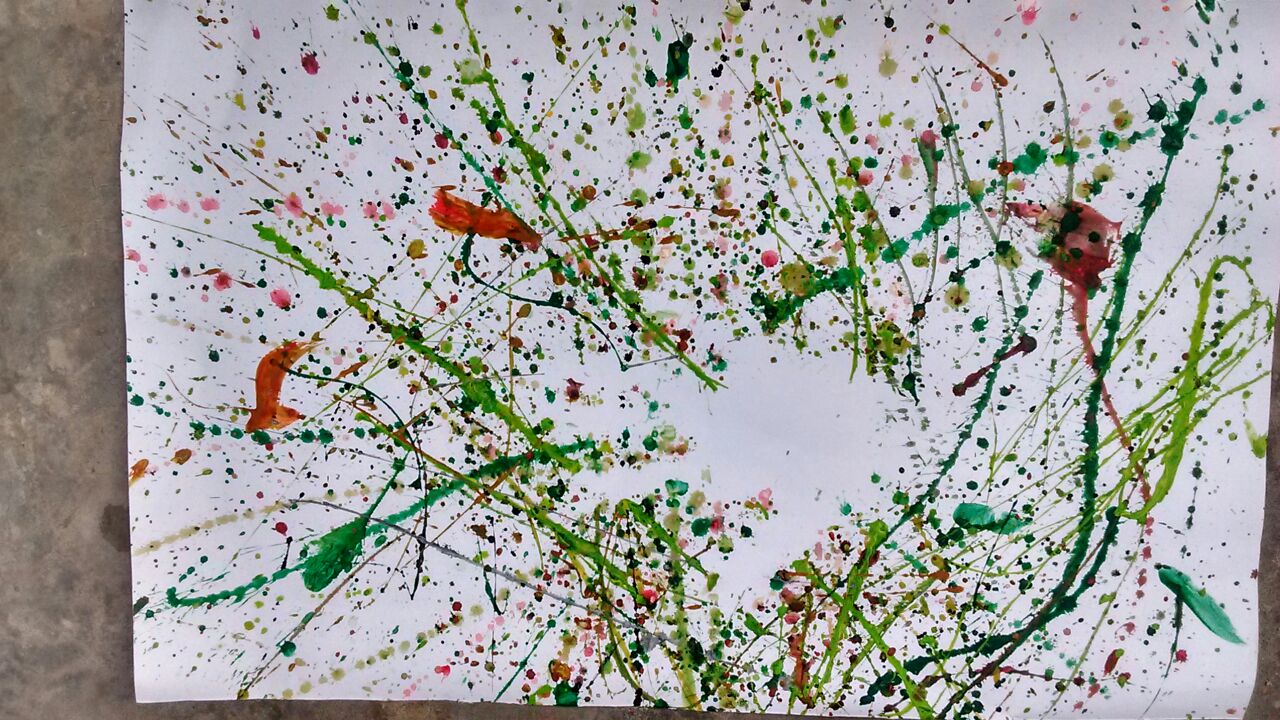
I also gifted one painting prepared by NCD peer educators and Good Health Advocates from Bapu camp Mandi village south Delhi slum. Nada India has been working with them for the last five years.
The painting has a life of its own. I try to let it come through" - Jackson Pollock https://www.jackson-pollock.org
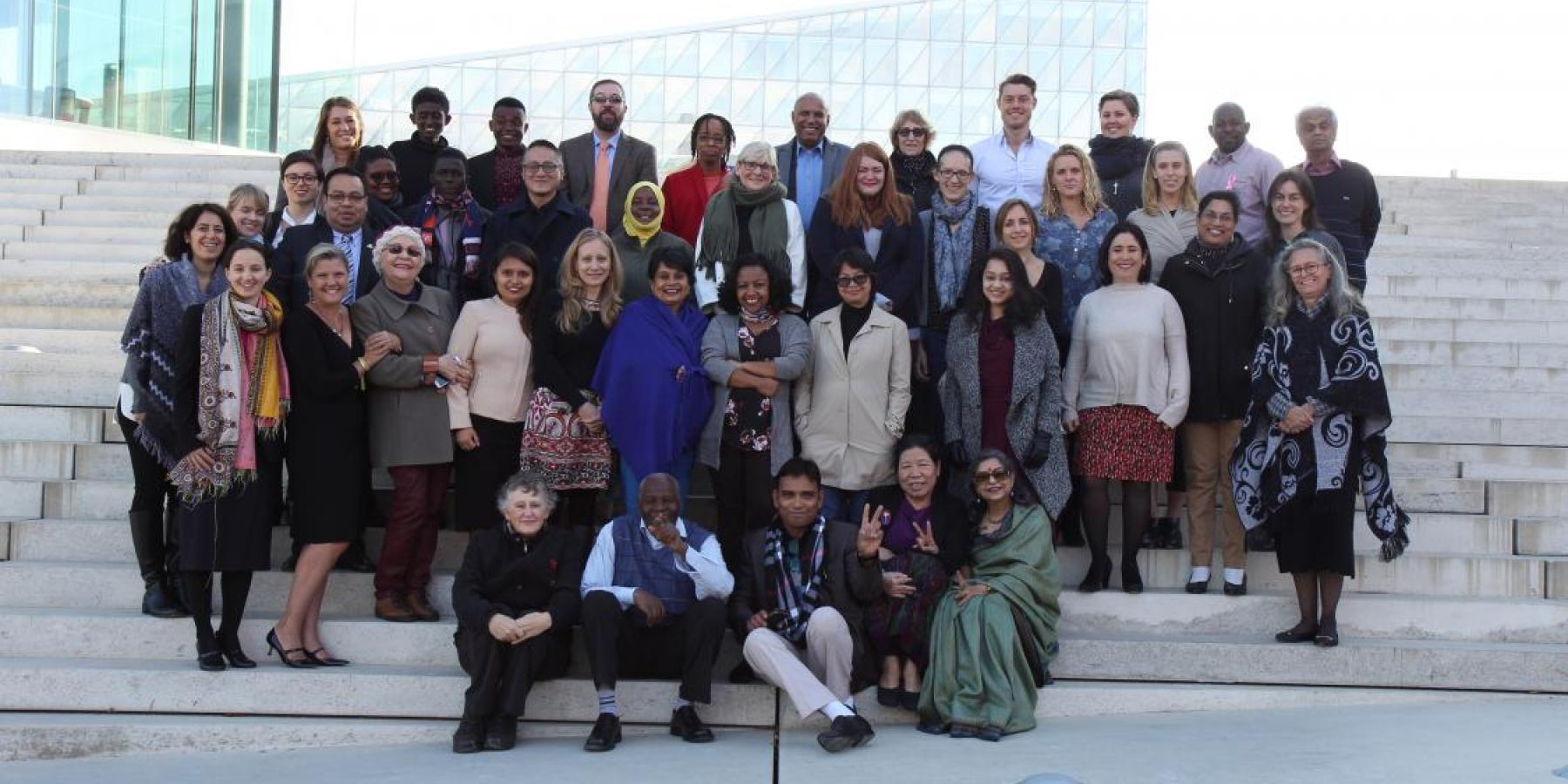
"The workshop focused on the needs and agenda from the perspective of the people suffering from NCDs themselves or caregivers to people suffering from NCDs. Several powerful personal stories were shared by participants on how they overcame the challenges of the diseases as well as became strong advocates for bringing treatment and diagnostics to people in their countries. There was a lot of discussion on identity, participation, voices, prevention, treatment, advocacy and commitment. The participants were divided into groups to discuss and debate on the agenda items and arrive at consensus as a larger group. The debates were invigorating and the group as a whole drafted the final advocacy agenda in its language, content and important points to be presented at the NCD Forum in Sharjah as stated by Dr. Ratna another participant from Dakshma India.




.png)


.png)